Preces informācija
Preces apraksts angļu valodā:
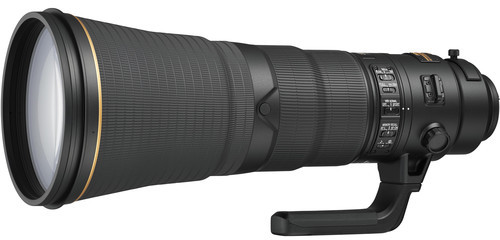
Long reach with superior performance.
SPORT Vibration Reduction
Technology
Long reach with superior performance.
When you're at the top of your game, you need gear that can keep up. The AF-S NIKKOR 600mm f/4E FL ED VR makes no compromises when it comes to performance. This popular 600mm prime lens has been optimized for today's high-resolution image sensors and fast shooting Nikon DSLRs, elevating your ability to quickly capture stunning images. A new magnesium alloy lens barrel design and the incorporation of fluorite elements makes it nearly 3 pounds lighter than its predecessor. Pair that with the latest in lens innovation and optical precision for the ideal lens choice for outdoor sports, action and nature photographers who need the reach a 600mm focal length will provide.
Tripod-compatible image stabilization
~4.0 stops of Vibration Reduction
Reduce blur caused by camera movement, even in low light. Nikon's VR image stabilization counteracts camera shake and vibration up to ~4.0 stops*, a must-have feature when working handheld, on a monopod or even a tripod. A specialized Sports Mode is optimized for camera pans and fast-action sports, and the Tripod Mode eliminates the subtle ground vibrations that are constantly passing through a tripod or monopod.
Lens-to-camera precision
Superior AF tracking and exposure control
Track fast moving subjects—even those moving erratically, at random speeds or approaching the camera quickly—with tack-sharp AF precision. During high-speed continuous shooting, the electromagnetic diaphragm mechanism operates in sync with the camera shutter for fast automatic exposure control and consistency between shots, even when using a compatible teleconverter.
Ready for the field
Lightweight, durable and reliable
This is a lens built for tough assignments. A new magnesium alloy barrel and fluorite elements reduce the overall weight by nearly 3 pounds versus its predecessor**. The protective front meniscus is coated with Nikon's nonstick Fluorine coat, which makes it easier to wipe off water, dirt and smudges. Ball bearings in the tripod collar ring ensure smooth transitions between horizontal and vertical shooting.
**AF-S NIKKOR 600mm f/4G ED VR
**AF-S NIKKOR 600mm f/4G ED VR
SPORT Vibration Reduction
For pros shooting fast and erratic moving sports subjects, using the SPORT VR mode will give you a more stable viewfinder image, handheld or when using a monopod, even if you’re panning. Track subjects easier when shooting in Continuous mode and as an added benefit with the D4S, the continuous shooting frame rates and release lag time are not affected while using VR. Even use SPORT VR when shooting HD video. The Tripod VR function even eliminates the vibrations that may transfer from the ground to the tripod in both Normal and SPORT VR modes.
Technology
-
A/MA/M stands for Auto-Priority Manual Mode. This mode also enables an easy transition from autofocus to manual during AF operation. However, mode switch sensitivity has been altered to reduce the possibility of sudden unintentional switching to manual focus while shooting.
-
Electromagnetic Diaphragm MechanismAn electromagnetic diaphragm mechanism in the lens barrel provides highly accurate electronic diaphragm or aperture blade control when using auto exposure during continuous shooting. With conventional D/G type lenses, the diaphragm blades are operated by mechanical linkage levers.
-
ED (Extra-Low Dispersion) GlassAn optical glass developed by Nikon that is used with normal optical glass in telephoto lenses to obtain optimum correction of chromatic aberrations.
-
Fluorite Lens ElementFluorite (FL), a lightweight mono-crystal optical material, has excellent optical properties while reducing overall lens weight to improve balance and handling, especially useful in longer focal length lenses.
-
Fluorine CoatPhotographers need gear that can withstand the elements. Nikon’s fluorine coat effectively repels dust, water droplets, grease or dirt, ensuring easy removal even when they adhere to the lens surface. Nikon’s fluorine coat endures a high frequency of lens surface wiping and its anti-reflective effect also contributes to the capture of clear images.
-
IF LensA NIKKOR lens in which only the internal lens group shifts during focusing. Thus, IF NIKKORS do not change in size during AF operation, allowing for compact, lightweight lenses capable of closer focusing distances. These lenses will be designated with the abbreviation IF on the lens barrel.
-
M/ASelect NIKKOR lenses have a focusing mode which allows switching from automatic to manual focusing with virtually no lag time by simply turning the focusing ring on the lens. This makes it possible to seamlessly switch to fine manual focusing while looking through the viewfinder.
-
Nano Crystal CoatAn anti-reflective coating developed by Nikon that virtually eliminates internal lens element reflections across a wide range of wavelengths. Nano Crystal Coat solves ghost effects caused by red light and effectively reduces ghost and flare caused by light entering the lens diagonally.
-
Silent Wave MotorAF-S NIKKOR lenses feature Nikon’s Silent Wave Motor (SWM). This technology converts “traveling waves” into rotational energy to focus the optics. This enables high-speed autofocusing that's extremely accurate and super quiet.
-
Super Integrated CoatingNikon Super Integrated Coating is Nikon's term for its multilayer coating of the optical elements in NIKKOR lenses.
-
Vibration ReductionA Nikon in-lens technology that improves image stability by automatically compensating for camera shake. Lenses that offer VR will feature the abbreviation VR on the lens barrel.
Bieži pirkts kopā
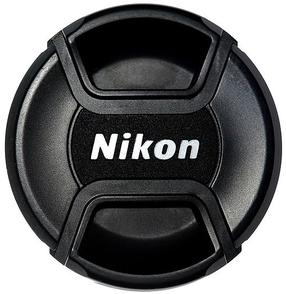
Objektīva vāciņš Nikon LC-72 72 mm
Parastā cena
24,89 €

TOP prece
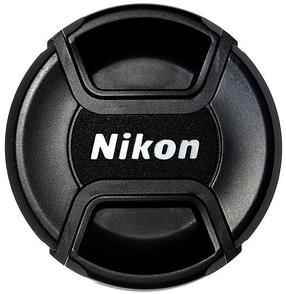
Objektīva vāciņš Nikon LC-58 58 mm
Parastā cena
24,89 €